Unlocking Your Mind: Strategies to Improve Memory, Focus, and Mental Clarity
4/20/20265 min read


Recognizing the Problem: Brain Fog and Low Focus
Brain fog and low focus are increasingly common phenomena that affect many adults and students, significantly impacting their daily lives. Brain fog is not a medical condition but rather a term that describes a range of cognitive impairments including forgetfulness, mental fatigue, and difficulty concentrating. Individuals experiencing brain fog often report feelings of confusion and a lack of mental clarity, which can disrupt both personal and professional activities.
Low focus tends to coincide with brain fog and manifests as diminished attention span and an inability to zero in on tasks. This reduced capacity to concentrate often leads to declines in work and academic performance. For students, this may result in poor grades and an inability to absorb information effectively. In professional settings, low focus can lead to mistakes, missed deadlines, and a decrease in overall productivity.
The impact of brain fog and low focus extends beyond mere inconvenience; they can affect overall well-being, leading to heightened stress levels and emotional distress. Chronic struggles with concentration can contribute to anxiety and a lack of motivation, as individuals become frustrated with their inability to manage daily responsibilities efficiently. As a result, many may find themselves trapped in a cycle of diminished performance and self-doubt.
Furthermore, understanding how brain fog and low focus manifest in various aspects of life is crucial. Whether it is losing track of tasks, experiencing difficulty in articulating thoughts, or struggling to remember details from meetings or lectures, these challenges can be pervasive and debilitating. Addressing these cognitive barriers is essential for anyone seeking to enhance mental clarity and regain control over their cognitive functions.
The Impact of Stress and Screen Time on Brain Function
Stress and excessive screen time have become pervasive issues in modern society, significantly affecting brain health and cognitive functions. The brain's response to stress involves the release of stress hormones such as cortisol, which, when elevated over prolonged periods, can lead to cognitive impairments. Studies have demonstrated that chronic stress not only diminishes memory and focus but also contributes to mental fatigue and confusion, leading to what many describe as mental clutter.
Additionally, the ubiquity of screens in everyday life presents a unique set of challenges. Constant notifications and digital distractions can disrupt attention spans, making it increasingly difficult to concentrate on tasks. This continuous partial attention results in diminished cognitive abilities over time, as the brain struggles to process multiple streams of information concurrently. Over-reliance on screens may also displace crucial brain-stimulating activities such as reading or engaging in face-to-face conversations, which are essential for maintaining mental acuity.
Furthermore, excessive screen time has been associated with negative emotional states such as anxiety and depression, which are intertwined with cognitive functions. This cycle perpetuates a state of stress, further compromising memory, focus, and mental clarity. For instance, studies show that individuals who experience high levels of stress and spend significant time on screens are likely to report difficulties in decision-making and problem-solving. The cumulative effects of these lifestyle choices create an environment where cognitive functions can be severely impaired, leading to a decline in overall brain health.
Addressing these challenges through stress management techniques and moderating screen time is essential for enhancing mental clarity and preserving cognitive capabilities. Fostering healthy habits not only mitigates the effects of stress but also promotes a more balanced approach to how we engage with technology, thereby allowing for a stronger, more resilient mind.
Understanding Brainwaves and Mental Fatigue
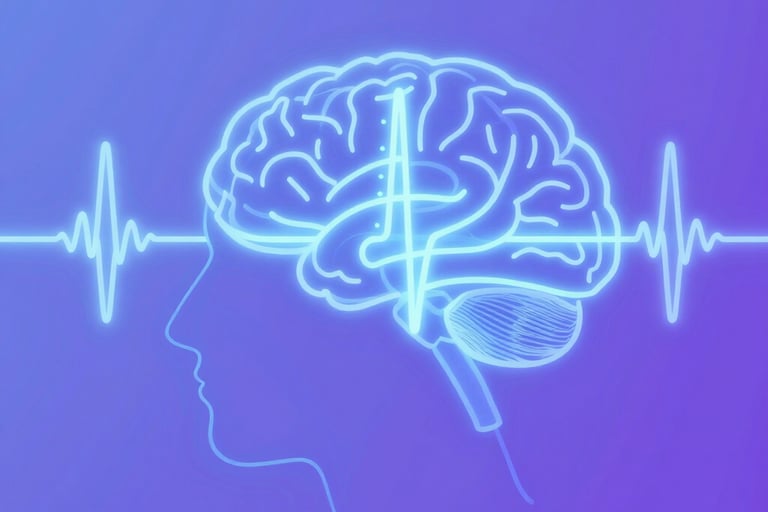
Brainwaves are electrical impulses in the brain that are produced when neurons communicate with each other. These brainwaves are measured in hertz (Hz) and vary in frequency, influencing our mental states from deep sleep to peak focus. There are four primary types of brainwaves: alpha, beta, delta, and theta. Each of these brainwave types is associated with distinct states of mind, playing a critical role in our cognitive abilities, including memory and concentration.
Alpha waves (8-12 Hz) are predominant during periods of relaxation while awake, such as during meditation or light daydreaming. In this state, the mind is calm yet alert, which enhances creativity and promotes mental clarity. Beta waves (12-30 Hz), on the other hand, occur during active thinking and problem-solving phases. This wave state is associated with heightened alertness and focus but can lead to increased mental fatigue if prolonged, negatively impacting memory retention and cognitive performance.
Delta waves (0.5-4 Hz) are the slowest brainwaves, dominating during deep sleep, which is crucial for healing and rejuvenation of the mind. The theta state (4-8 Hz), often observed during light sleep or deep meditation, can foster intuition and emotional connection. Disruption in these brainwave patterns can lead to mental fatigue, inhibiting our ability to concentrate and adversely affecting memory.
Understanding the relationship between brainwaves and mental fatigue is essential for developing strategies to improve focus and cognitive functioning. By recognizing how each wave type contributes to various mental states, individuals can implement techniques—such as mindfulness or focused breathing exercises—that promote healthier brainwave patterns, ultimately enhancing mental clarity and memory.
Harnessing Audio Frequencies for Better Focus and Memory
Recent research has illuminated the potential of audio frequencies in promoting relaxation and enhancing cognitive functions such as focus and memory retention. The human brain responds uniquely to various sound frequencies, with some tones exhibiting profound effects on mental clarity and awareness. For instance, binaural beats and isochronic tones are two popular audio techniques that engage the brain in a way that can help individuals enter states of deep concentration and enhanced memory recall.
Binaural beats involve playing two slightly different frequencies in each ear, resulting in the brain perceiving a third frequency that influences brainwave patterns. This phenomenon can prompt states ranging from relaxation to focused alertness, depending on the frequency used. Similarly, isochronic tones use single sound pulses to create a rhythm that can actively stimulate the brain, providing a structured auditory environment that may help individuals maintain focus during complex tasks.
The benefits of incorporating these audio techniques into one’s daily routine are substantial. Not only can sound frequencies pave the way for improved concentration, they also facilitate enhanced memory retention and retrieval. As individuals engage in tasks requiring significant mental fortitude, the soothing nature of specific sound patterns can reduce stress, making it easier to navigate demanding cognitive challenges. Furthermore, such audio practices can increase overall productivity, allowing for better performance in both personal and professional environments.
As people increasingly seek ways to optimize their cognitive processes, harnessing the power of audio frequencies presents an inviting avenue for improvement. By integrating sound frequencies into daily life, anyone can embark on a journey toward enhanced mental clarity and a more focused mind.
That’s why more people are turning to a simple audio-based method designed to support brainwave balance and mental clarity naturally.
Instead of relying on stimulants or complicated routines, this approach works by helping your brain shift into the optimal state for focus and memory.
Disclaimer: This article is for informational purposes only and is not intended as medical advice. Always consult with a healthcare provider for medical concerns.